Sportsbooks Are Always a Step Behind Live Action — Here's How Sharp Bettors Cash In

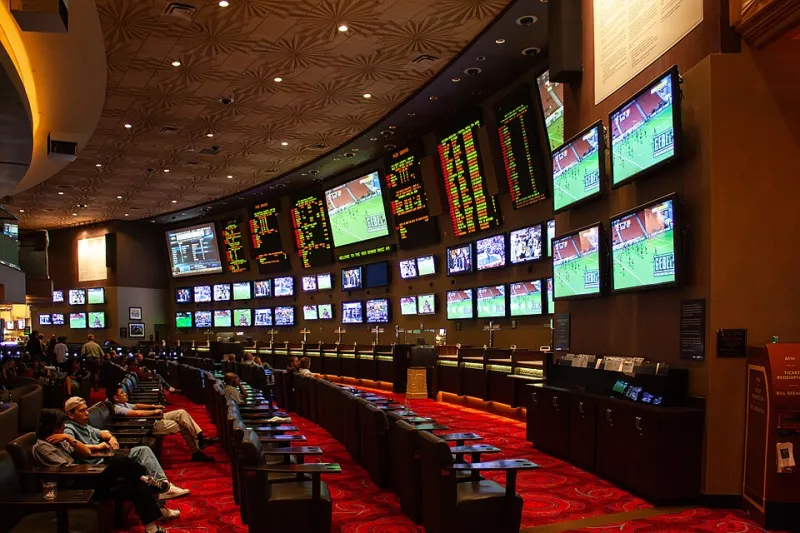
Photo: Leo Vegas Group, CC BY-SA 4.0, via Wikimedia Commons
If you've ever placed a live bet and felt like the odds shifted the exact second you hit confirm, you're not imagining things. The live betting market in the US is genuinely slower than what professionals overseas are working with — and that gap, even measured in seconds, is where real money gets made.
Let's break down what's actually going on.
The Infrastructure Problem Nobody Talks About
Most American sportsbooks — your DraftKings, FanDuel, BetMGM crowd — rely on odds feed providers to push live pricing updates to their platforms. These feeds come from third-party data aggregators who pull signals from trading desks, often based in Europe or Asia. By the time that data gets cleaned, formatted, transmitted, and rendered on your app, you're looking at anywhere from 10 to 30 seconds of delay compared to what a professional trading desk in London or Manila is seeing right now.
International betting exchanges like Betfair operate differently. They run peer-to-peer markets where odds adjust in real time based on actual money flowing in from users — think stock exchange, not sportsbook. The price discovery is immediate. There's no middleman sitting on the data.
US sportsbooks, by contrast, are still mostly running a traditional bookmaker model. They set the line, manage exposure, and update reactively. That reaction takes time.
What 30 Seconds Actually Looks Like in a Football Game
Think about a third-and-long situation in an NFL game. The quarterback takes a snap, scrambles, and picks up a first down. In the half-second after that play ends, a sharp bettor watching a low-latency stream — maybe a direct broadcast feed rather than a cable delay — already knows what happened. They're placing a live bet on the next drive before the sportsbook's feed has even registered the first down.
The odds on that next series haven't moved yet. They still reflect the situation from the previous play. That bettor just got a price that's stale by about 25 yards of field position.
This isn't cheating. It's not even a gray area. It's just information asymmetry — the same thing that drives every financial market on earth.
How Professionals Build Systems Around This
The sharpest live bettors don't just sit on the couch refreshing an app. They've built setups specifically designed to compress their own reaction time. We're talking about:
- Low-latency video feeds: Direct IP streams or satellite services that run 5–10 seconds ahead of standard cable or streaming packages. Sports bars, ironically, often have better feeds than what you're watching at home on your phone.
- Multiple screen monitoring: One screen on the game, one on the odds board, one tracking line movement across books simultaneously.
- Pre-set bet amounts: Removing the decision-making friction so the moment a trigger event happens, the bet goes in immediately.
- Knowing the book's update rhythm: Different sportsbooks update at different intervals. Some sharp bettors have effectively mapped out which platforms are slowest to react to specific play types.
None of this is accessible to someone casually betting on their phone during a Sunday game. That's kind of the point.
Why the Average Bettor Almost Never Catches These Windows
Here's the brutal truth: by the time you see a line that looks wrong, it's probably already been corrected. The books have their own risk management teams watching the same games. The moment a flood of sharp money hits a stale line, the system flags it and the odds get pulled or suspended — sometimes mid-bet.
You've probably seen that "bet suspended" message during live wagering. That's not a glitch. That's the book protecting itself from exactly this kind of situation.
Casual bettors also tend to make live decisions based on what they just saw emotionally — a big sack, a turnover, a momentum swing. They're reacting to the narrative of the game, not the math. Professionals are reacting to the math before the narrative even forms on screen.
The Regulatory Layer Makes It Worse
Unlike offshore books, US-licensed sportsbooks operate under state-by-state regulatory frameworks that add compliance checkpoints to their technology stack. Every odds update, in some jurisdictions, has to pass through logging and verification systems before going live. That's not a flaw in the system — it's by design for consumer protection. But it does mean the technical pipeline is longer.
European and Asian markets have had decades to optimize their infrastructure without the same regulatory fragmentation. The result is a structural speed disadvantage baked into every US live betting product on the market right now.
What You Can Actually Do With This Information
If you're not building a multi-screen trading setup with a fiber connection and a direct broadcast feed, you're probably not going to out-execute a professional on raw speed. But understanding why the market moves the way it does still gives you an edge in how you approach live betting.
Instead of chasing plays, focus on anticipating situations where the book is likely to be slow — high-action moments right after scoring plays, defensive stops in crucial down-and-distance situations, or momentum shifts early in the second half. These are the spots where stale pricing is most likely to exist, even if only briefly.
And next time you see a line that looks too good? Move fast. Because it won't be there long.